When you sail across the Pacific Ocean in the Pacific Puddle Jump, it may well be for the turquoise lagoons of French Polynesia, the lush green peaks of its islands, and the gentle trade winds in your sails—but you’ll stay for its people. The hospitality is unparalleled, and if you embrace the local customs, you will find the community will give you a genuinely warm reception.
From Inspiration to Involvement
“Maeva” and “manava” are words you are sure to hear when you dock in French Polynesia, after completing your Pacific Puddle Jump safe and sound. You might come for the breathtaking scenery, but the kindness of the people will win your heart. Nowhere else will you find anything like the hospitality of the Polynesians, as long as you adhere to local customs.
People in Fenua enjoy a relaxed social life, and interact in a straightforward informal way. If you are invited somewhere, you should accept. If you are offered fruit, the same goes. Bear in mind that the local practice of giving and reciproctating is very important here.
When speaking French, the informal “tu” form is the norm, but if someone uses the “vous” form, you should do the same. Often just raising the eyebrows is enough to signal a “yes”. This pleasant silent local language is part of the charm of communication in Fenua.
Religion gives structure to everyday life and cultivates a sense of restraint. The cliché pictures of naked Vahine women belong on postcards. In reality, most women bathe in shorts or a pareu.

Another important mark of respect is to remove your shoes before entering a house, even when your host tells you that it is okay to keep them. It is a simple gesture that can open many doors.
Finally, tipping is not customary, and most prices are fixed—except for pearls, where some negotiation is acceptable. By adhering to these customs, you will experience Polynesian culture in all its simplicity and kindness.
Being invited out for a “bringue” is a true mark of respect. This kind of local, joyful, celebratory party is much more than just merrymaking and music, its a national institution. The ukelele comes out, you open a local Hinano beer and the mana does the rest. With high spirits and good camaraderie, the evening gets off to a good start and lasts till dawn. Added to the mix—a guitar, rhythmic spoons, and a garbage can converted into a double bass with a little wire and a broom handle. You laugh, sing, and dance, enjoying every minute.
A Sailor’s Duty to Safeguard the Lagoon
Before dropping anchor in the waters of a new island, spend some time learning about its past, how it formed, and its legends. Knowing them is a sign of respect to the people welcoming you. On site, you can offer to trade something, such as equipment, a service or a helping hand—but it is best not to offer alcohol. Sharing a skill, passing on a technique or simply lending a hand are all ways of enjoying a genuine connection with the locals..
Taking an interest in daily life, listening to an elderly person’s stories, taking part in a fishing trip or a local festival are all priceless moments, worth more than any postcard. They turn a trip into a real immersion in local life, and you become a guest of Fenua, and more than just a passing visitor.

With over 600 sailing yachts and almost 3,000 sailors passing through Polynesian waters annually, it is important to be aware of the regulations, where you can anchor (escales.gov.pf) and sailing areas, and your obligation to pay the relevant taxes. The tourist boards on most islands are often your first point of contact.
Before you go fishing, for example, inform yourself about fishing regulations (ressources-marines.gov.pf) And do not fish for more than you actually need. People fish for their meals here and not for the freezer.
At anchor, aim for the sandy sea beds. Coral is alive, but easily damaged, and it is difficult to repair Use your wastewater tanks in coastal areas and lagoons, avoid scraping the hull at anchor (risk of introducing invasive species) and limit night-time lights, which disturb wildlife.
Waste is another big concern. Facilities are scarce on the smaller islands, so hold onto your garbage and do not burn anything on the beaches. Take your boat’s household waste to islands with landfill sites, such as Nuku Hiva or Ua Pou in the Marquesas, in the Society Islands. Recyclable waste, such as cans, plastic bottles, and so on, can only be processed in Tahiti, Moorea, Bora Bora and Ra’āitea. Keep your hazardous waste on board (expired flares, oil, batteries) until you reach Tahiti, where you will find specific collection points.

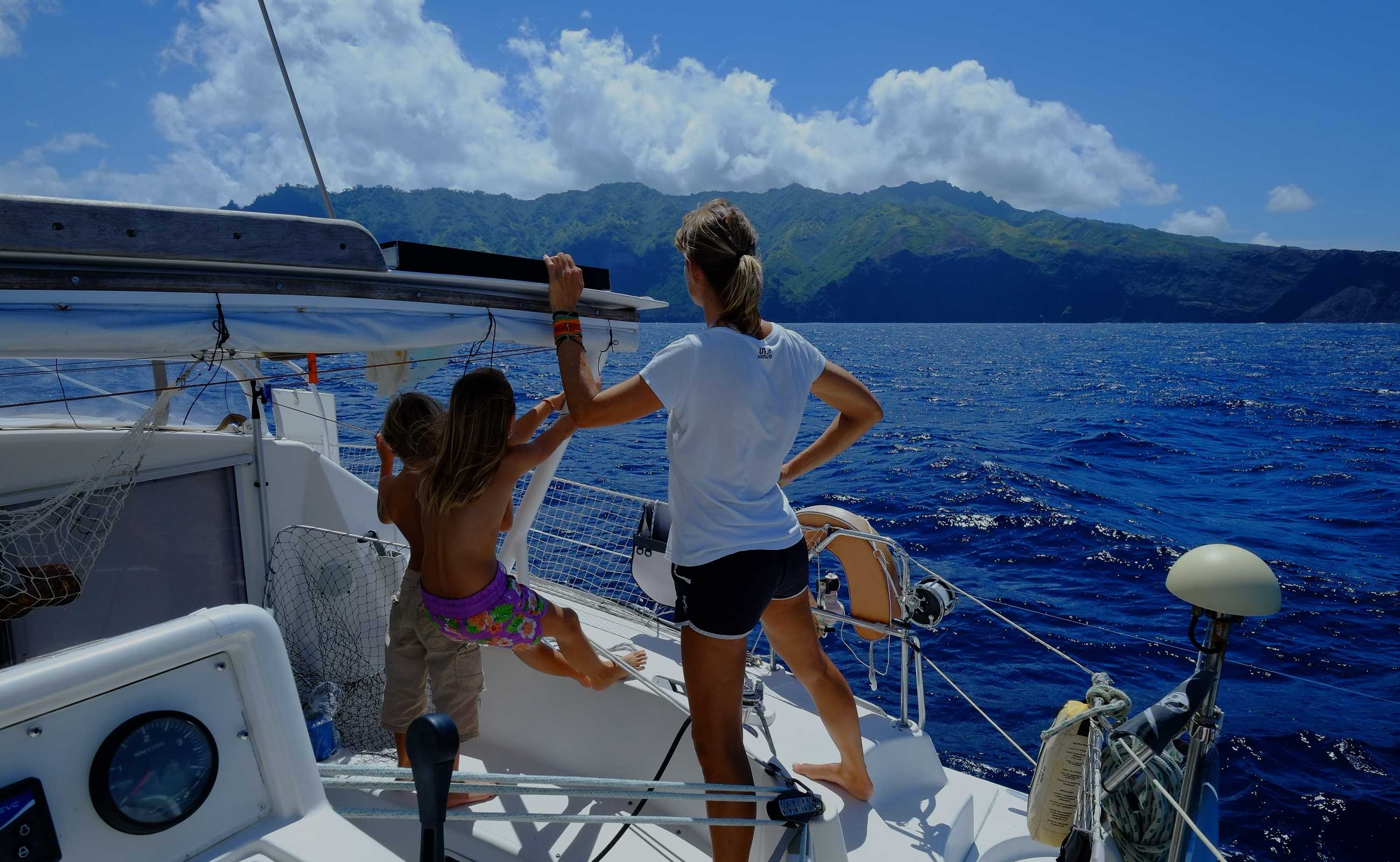
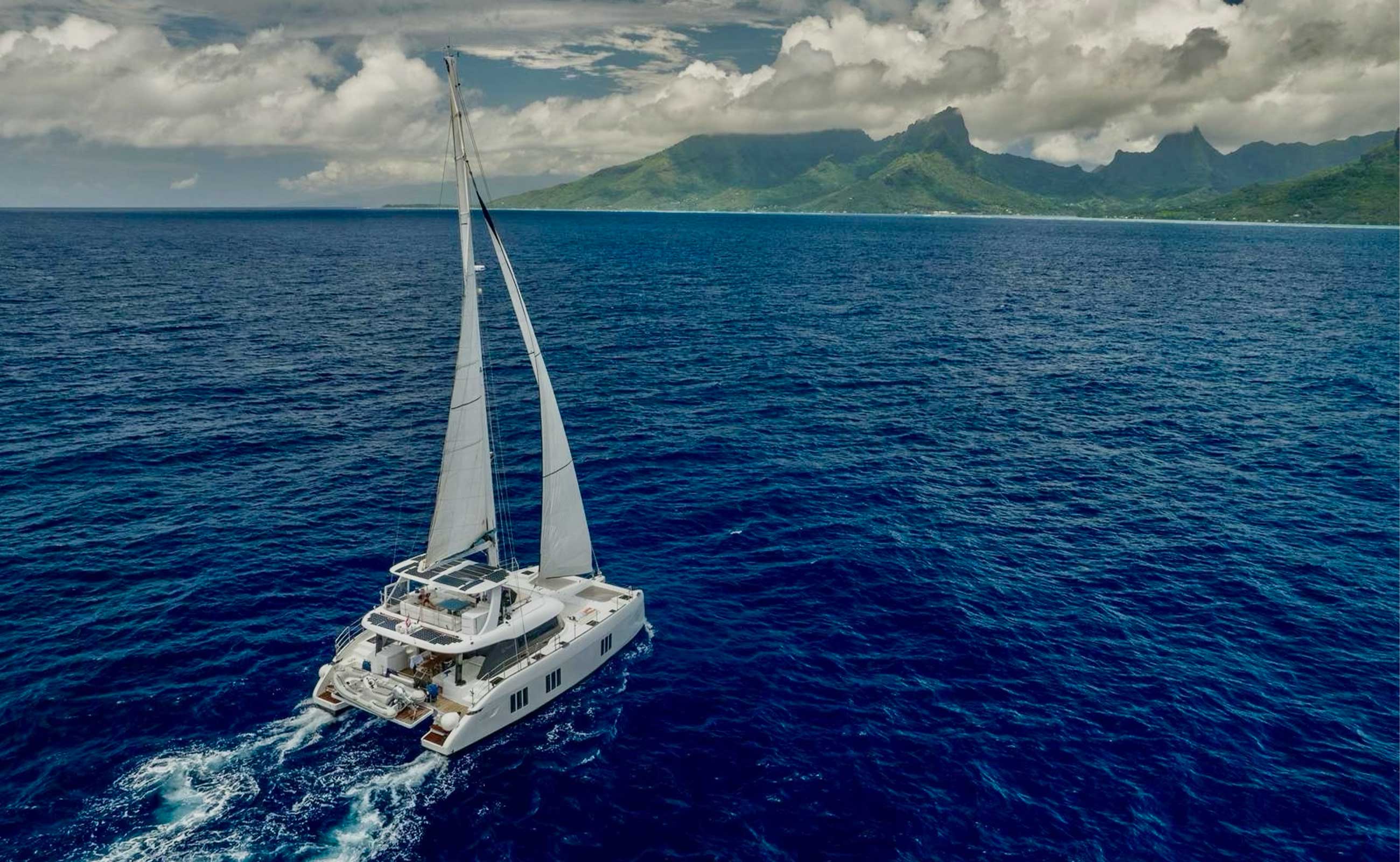
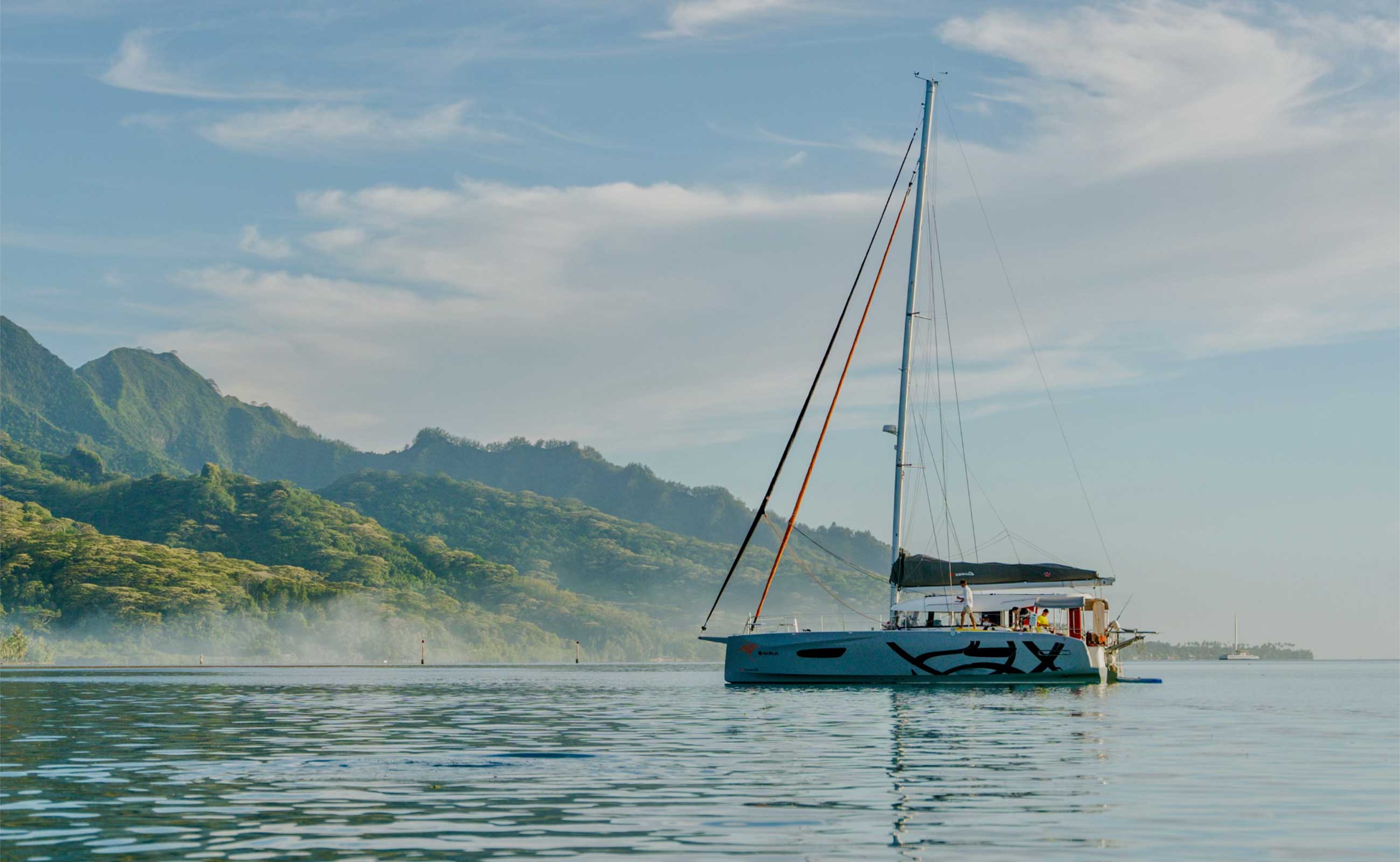

From Escaping the World to Becoming Part of It
On shore, the same rules apply: respect the island and the people who live there. Beaches lined with houses are often privately owned, so always ask before anchoring or picking fruit—a quick ‘Ia ora na, e taea anei?’ (Hello, may I?) goes a long way, and it is enough keep everyone smiling.
Underwater requires the same care. Refrain from touching coral or shellfish and watch your fins to avoid harming sea creatures. The lagoon is more than just scenery, its a living, inhabited world.
Sailing in French Polynesia is about learning to slow down, observe and live in sync with the wind and the people. More than just a stopover, it teaches you to respect the sea, the land, and the people. Being a sailor in Fenua means seeing yourself as a guest, and showing your gratitude through thoughtful actions and mindfulness.
THE TAHITIAN LANGUAGE
While you may not be fluent in Tahitian, having some basic vocabulary can help you engage with the local population and show that you are interested in them. In Tahitian, there are no plurals, genders or conjugations. The past, present and future are expressed by using prepositions or postpositions. Tahitian is often preferred for the names of flowers or fish.
Yes: ‘e, ‘oia
No: ‘aita
Hello: ‘ia ora na
Goodbye: nana
Thank you: mauruuru
Good luck: fa’aitoito
Welcome: maeva, manava
How are you?: e aha te huru ?
Fine: maita’i
Everything is fine: ‘aita pe’ape’a
To your health: manuia
Bon appétit: Tama’a maita’i
Come: haere mai
My name is …: ‘O … to’u i’oa
Preparing for Your Pacific Adventure
Crossing an ocean is one of life’s greatest adventures — but you don’t have to do it alone. The Pacific Puddle Jump offers a wide range of technical and logistical support to help you make your passage safe, smooth, and unforgettable.
Each year, hundreds of sailors successfully make the crossing thanks to the preparation, guidance, and sense of community the rally provides. Explore the different support packages and partner services to find what best fits your boat, crew, and sailing style — and start your Pacific crossing with confidence.
Discover your rally support options below: